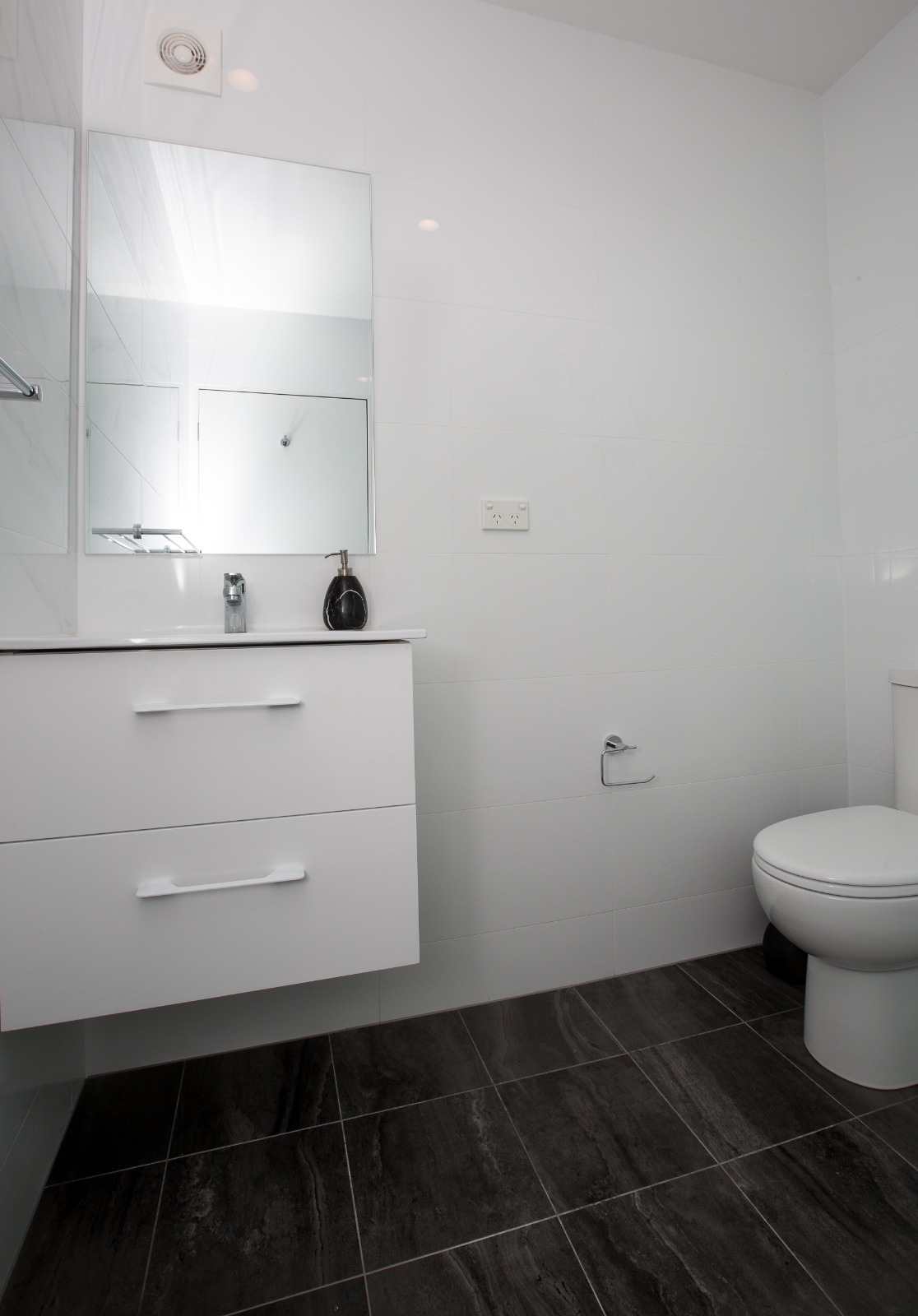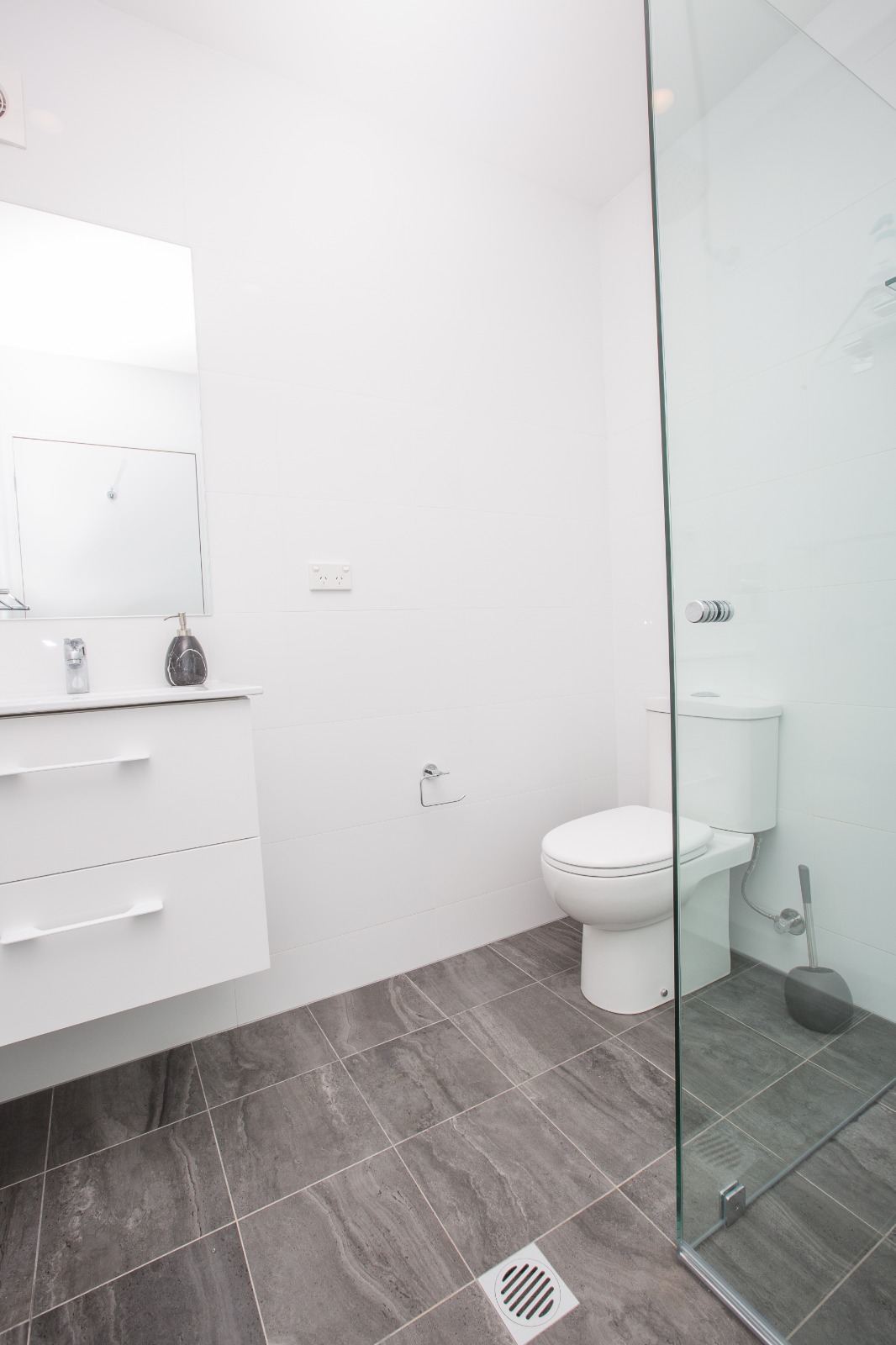
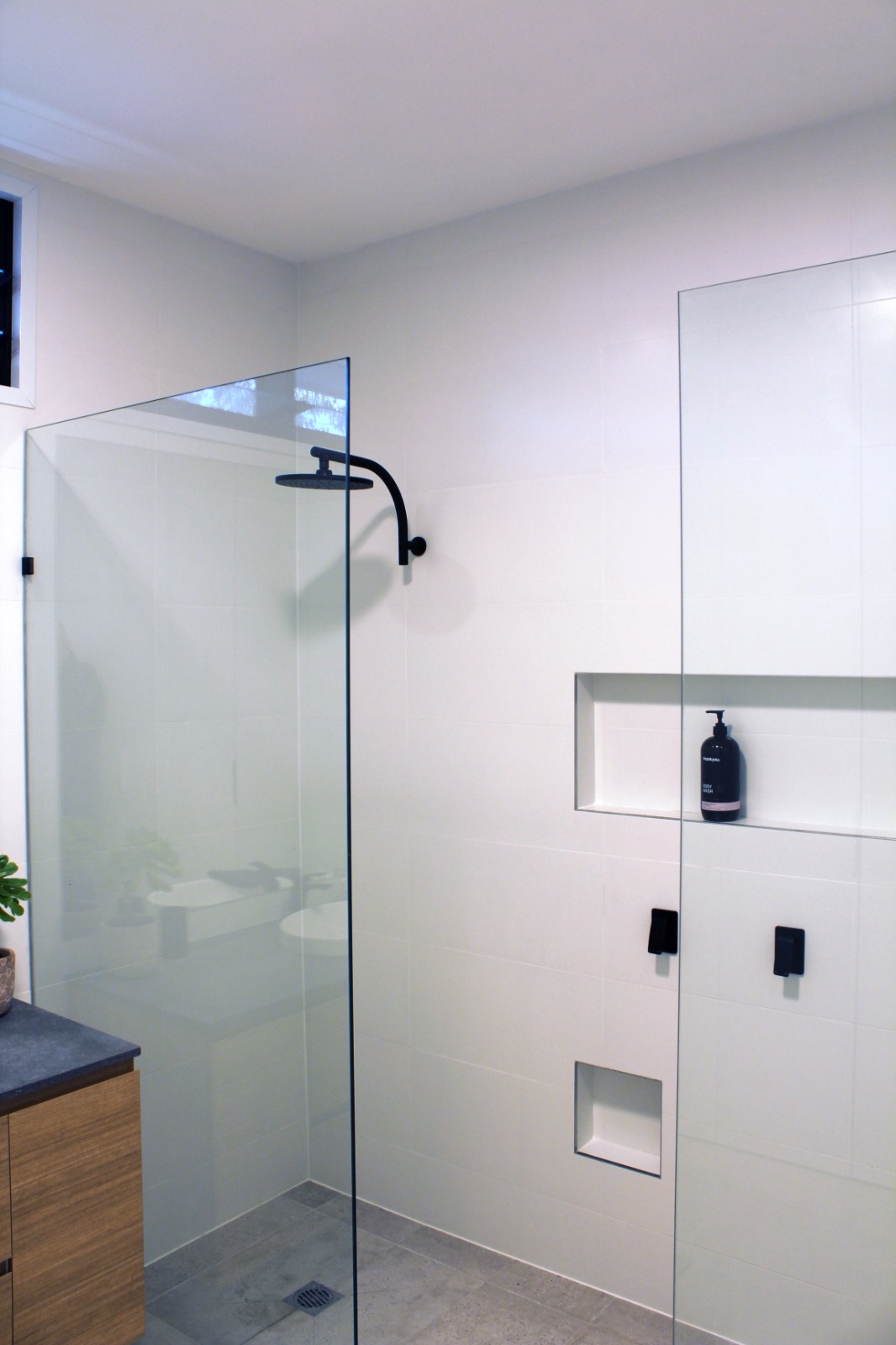
Bathroom Renovations North Ryde

There are two completely different jobs hiding under the words “bathroom renovation in North Ryde”, and the quote for one tells you nothing about the other.

One is a room in a house. The other is a room in a building, which means a committee, a vote, and a set of rules about waterproofing that most builders will not mention until they are already pulling tiles off your wall.

Pick yours below. The rest of this page assumes you know which one you are.

Book a Site Visit

Having a bathroom renovation in North Ryde? Which one are you?

You almost certainly have a bathroom built between the 1960s and the 1980s, because that is when most of North Ryde's housing went up. Beige or pink wall tiles to about shoulder height. A bath nobody has used in a decade. A shower that was sized for someone smaller than you.

The good news is that it is your room and your decision. Move the shower, lose the bath, steal 300mm from the hallway linen cupboard, knock the whole thing into the toilet next door. All of it is on the table, limited only by where the drainage runs and what is inside the walls.

No council approval needed, as long as you stay inside the existing walls and don't touch structure.
What you do need to plan for: anything built before the late 1980s might have asbestos in the wall sheeting or under the vinyl, and we test before demolition rather than after.

Three to four weeks, start to finish.

Read the strata section below before you do anything else, including getting quotes.

Short version: your bathroom renovation is almost certainly classed as major works under NSW strata law, because it touches waterproofing. That means a vote at a general meeting with a 75% majority, not an email to your strata manager. Builders who tell you otherwise either don't know or are hoping you don't ask.

Start the approval before you start choosing tiles. We have watched people pick a vanity in January and get a vote in June.

The building will also have opinions about working hours, lift bookings, where the skip goes and which days are off limits. None of it is difficult. All of it affects the price and the program, which is why we want to know your building before we quote.

Four to six weeks on site, plus however long your owners corporation takes.

The Approval Most Unit Quotes Get Wrong

If you own a unit, this is the most useful thing on this page.

NSW strata law sorts renovations into three tiers, and which tier you land in decides who has to say yes.

Tier What it covers Who approves it
Cosmetic work (s109) Painting, hanging things on walls, replacing a towel rail Nobody. Go ahead
Minor renovations (s110) Kitchen cupboards, flooring, air conditioning, some bathroom work Ordinary resolution, or the committee if a by-law allows
Major works (s108) Structural changes, anything altering common property, anything involving waterproofing Special resolution at a general meeting

Here is the part that catches people. Waterproofing is expressly excluded from both the cosmetic and the minor renovation tiers. Not “usually”. Excluded by the Act.

A real bathroom renovation means lifting the floor tiles, which means the membrane, which means waterproofing. So unless you are only swapping a vanity and a shower screen without touching the floor, you are in major works.

What that means in practice:

  • A general meeting, not an email to the strata manager
  • A special resolution, meaning no more than 25% of votes cast against
  • Your strata committee cannot approve it on the owners corporation’s behalf, and the managing agent cannot wave it through
  • A common property rights by-law is often needed as well, setting out who maintains the new waterproofing in future. Get this right and a leak in year four is a known question rather than a fight

Timelines follow from that. If your building holds one AGM a year and nobody calls an extraordinary general meeting, you wait. Most people should budget two to four months from first asking to approval in hand, and should start that clock before choosing a single tile.

By-laws vary between buildings, and some schemes have passed by-laws that change what the committee can decide. Your strata manager can tell you which applies to yours, and we are happy to put together the scope, licence and insurance pack they will ask for.

NSW Government: strata renovation rules

Your Waterproofing Is a Six Year Warranty Item

Your Waterproofing Is a Six Year Warranty Item

Most people assume a bathroom comes with the same warranty as a paint job. It doesn’t.

The Home Building Act 1989 splits statutory warranties into two periods: six years for a major defect, two years for everything else. When the Act was amended, waterproofing was expressly added to the list of major elements, alongside structural load bearing elements and fire safety systems.

So if the membrane under your new floor fails in year five, that is a six year warranty item, and the law is on your side. If your tiler grouted it badly and it looks ordinary, that is two years.

This is worth knowing for two reasons.

The first is that it tells you how seriously to take the part of the job you will never see. Waterproofing failures are among the most commonly litigated defects in New South Wales, and they are almost never visible at handover. They show up years later, usually on a wet patch in the next room.

The second is that it gives you a question to ask. A builder who knows the membrane carries a six year exposure treats it differently from one who thinks it is a two year problem.

How we do it, on every bathroom, house or unit:

  • Full membrane to AS 3740, the Australian Standard for waterproofing of domestic wet areas
  • Correct falls to the waste before anything goes down
  • Membrane turned up the walls and into the corners and hobs, not stopped at the floor
  • A flood test before a single tile is laid
  • Photographs at each stage, handed to you at completion

That last one is the bit to insist on, from us or from anyone. A photo of your membrane holding water is the only proof you will ever have that it was done properly, because by the time anything goes wrong it is under two tonnes of tile.

NSW Fair Trading: building defect complaints and statutory warranty periods
What It Costs, Without a Table

What It Costs, Without a Table

No table here on purpose. Bathroom pricing doesn’t sort into neat rows, and a table invites you to find your number and stop reading, which is how people end up surprised.

Four kinds of job, roughly.

A refresh, around $10,000 to $18,000. New tiles, vanity, tapware, paint, layout untouched. The floor membrane stays, which is the whole reason it’s cheap. If the existing waterproofing is sound this is excellent value and we will tell you if that’s the situation you’re in.

A full renovation, around $18,000 to $30,000. Everything out, new membrane, new tiling, fixtures where you want them rather than where they were. This is most jobs.

A premium bathroom, $30,000 to $45,000 and up. Stone, a freestanding bath, heated floors, a vanity built for the room rather than bought for it.

An ensuite costs less than a main bathroom but nowhere near proportionally. A two square metre room needs the same plumber, the same waterproofer, the same number of trade visits as a six square metre one. You save on materials and almost nothing on labour. People find this genuinely annoying and we would rather say it upfront.

What moves the number: relocating the toilet, because it means opening the floor and finding the stack. Failed waterproofing under the old tiles, which is a discovery not a line item. Asbestos in a pre-1990 house. And in a unit, whatever your building requires, which can be anything from a $400 lift protection fee to a condition that all noisy work happens between 9 and 3.

Four Weeks, One at a Time

Demolition, and in a pre-1990 house, asbestos testing before anything is touched. Then the plumber and the electrician do their rough-in, which is the stage that locks in where your shower and vanity will live for the next twenty years.
This is the loud week. In a unit it's the one your neighbours will notice, so it's worth a note under a few doors beforehand.

Screeding to get the falls right, then the membrane, then curing, then the flood test. The bathroom sits full of water and we check it holds.
Nothing visible happens this week and it cannot be rushed. Membranes cure on their own schedule. Any builder offering to compress this week is offering you a problem in year five.

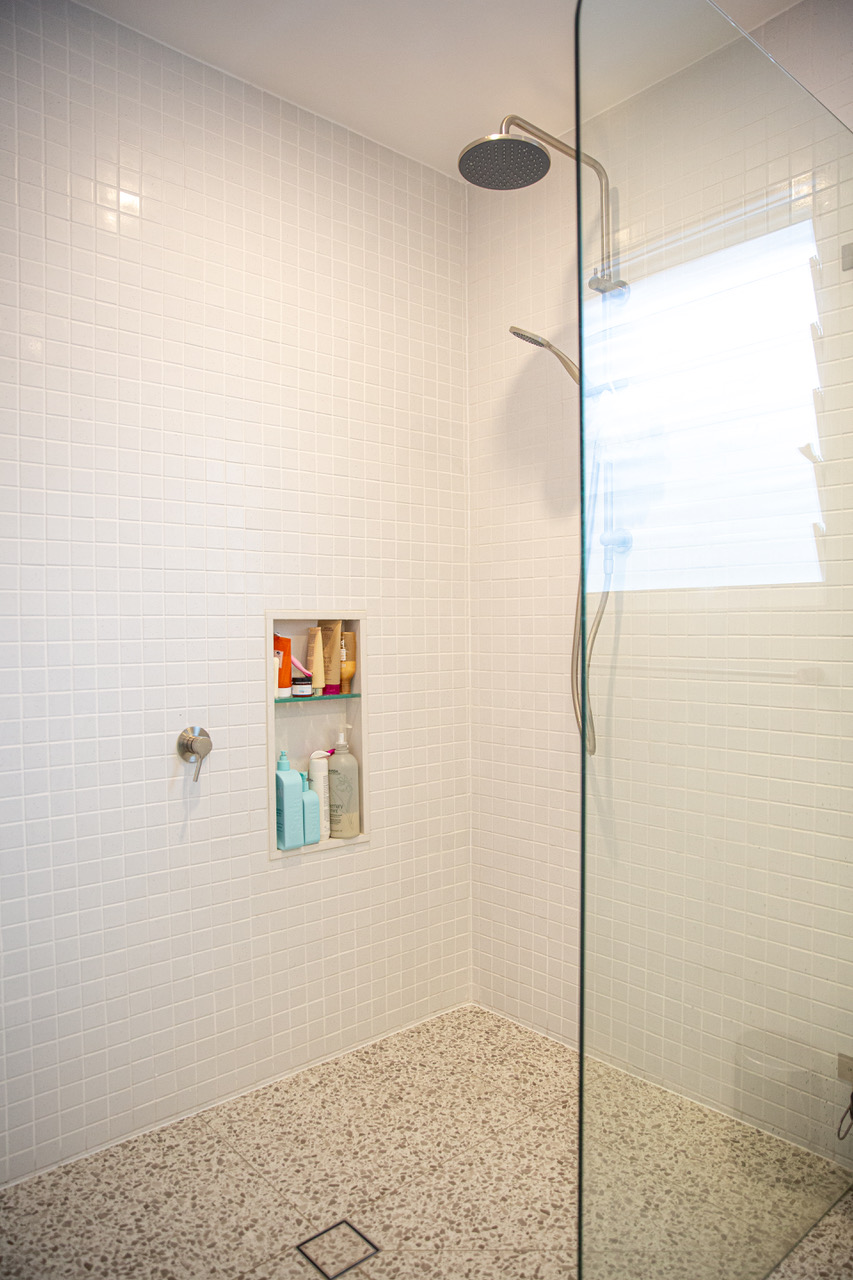
Floor, then walls. Tile layout gets set out properly first, because the difference between a good tiling job and an ordinary one is mostly decisions made before the first tile goes on: where the cuts land, how the niche lines up with the courses, whether the floor pattern runs into the shower or stops at it.

Vanity, tapware, toilet, screen, mirror, towel rails, painting. Silicone last.
Then we walk through it with you, write down anything that needs attention, and hand over the waterproofing photos.

A note on units

Add a week. Not because the work is harder but because building access hours, lift bookings and restricted days mean a trade that would get a full day in a house gets five hours in an apartment.

What Comes Out From Behind a North Ryde Wall

What Comes Out From Behind a North Ryde Wall

Old bathrooms are consistent about what they hide, which is at least convenient.

A membrane that was never going to last. Either it cracked years ago, or it was painted onto the floor and stopped where the wall began, which does nothing at the one point where water actually gets out. Older bathrooms often predate the current standard entirely.

A shower base that has been leaking into the framing for years. Nobody notices because it goes down rather than sideways. You find it when the floor comes up and the bearers are soft.

Asbestos. In a pre-1990 house it turns up in wall sheeting, in the ceiling, and in the backing under vinyl flooring. We test before demolition and arrange licensed removal if it’s there. It is not a crisis. It is a line item that needs to be in the quote rather than discovered on day two.

Galvanised pipework at the end of its life, usually revealed by how little water comes out of the new tapware if you don’t replace it.

In a unit there is one more thing worth saying. A leak in a house is your problem. A leak in a unit is a wet ceiling in someone else’s living room, an insurance claim, and a conversation with a committee who already have your renovation on their minds. That is the real reason we won’t compress the waterproofing week.

Four Questions, and Why They Work

Four Questions, and Why They Work

For home renovations in North Ryde, we’ve talked about a general list for hiring a builder. This time, these four are bathroom specific, and each one is designed to be awkward for the wrong builder to answer.

Who actually does the waterproofing, and are they licensed for it? Some builders have a dedicated waterproofer. Some get the tiler to do it on the way past. The answer tells you a lot, and a builder who has to think about it has told you already.

Will I get a flood test photo before the tiles go down? The only honest answers are yes or no. If the answer involves an explanation, it’s a no.

Is the waterproofing a separate line on the quote? When it’s buried inside “bathroom works” you have no way of knowing what was allowed for it, and it’s the first thing that gets thinned out when a quote is sharpened to win a job.

If I’m in a unit, what’s your experience with a section 108 approval? This one is a filter. A builder who has done unit bathrooms in strata will know exactly what you mean. One who hasn’t will tell you the strata manager can sort it out, and you will have learnt what you needed to know.

Ours, for the record: licence 305670C, lookupable on the NSW Fair Trading site in about thirty seconds. Home warranty insurance certificate before work starts on anything over $20,000. And yes to the flood test photos, on every bathroom, without being asked.

FAQs

Possibly not, but check carefully. If your renovation genuinely doesn't touch waterproofing, committee approval under a delegating by-law can be enough. The moment the floor membrane is involved, waterproofing is excluded from that pathway by the Act and it becomes major works. Ask your strata manager specifically whether your scheme treats bathroom waterproofing as major works, and get the answer in writing.

Usually yes, if the floor stays sealed and you're not opening up the membrane. That's a cosmetic or minor renovation depending on your by-laws. It's also a genuinely good option if your waterproofing is still sound, and we'll tell you if that's your situation rather than talking you into a full strip-out.

Budget two to four months. If your building holds one AGM a year and nobody calls an extraordinary general meeting, you're waiting for it. Some owners corporations will call an EGM for a renovation, often at the owner's cost. Ask early what yours does.

It might. Wall sheeting, ceilings and the backing under vinyl are the usual places in houses from that era. We test before demolition and use a licensed removalist if it's there. Costed upfront, not discovered halfway.

In a house with a second bathroom, easily. With only one bathroom, you're without it for three to four weeks and most people make an arrangement. In a unit it's usually fine, though the first week is loud.

We manage the whole job with our own regular trades. The same plumber and the same tiler, not whoever is available that week. It's the main reason the program holds.

The exhaust fan. People spend $4,000 on tapware and put in whatever fan was cheapest, then wonder why the ceiling goes mouldy. In a small or internal bathroom, which describes most unit bathrooms, the fan is doing more work than almost anything else in the room.

Yes. If you're thinking beyond the bathroom, the home renovations in North Ryde page covers the rest.

Send Us a Photo of the Room

That’s genuinely all we need to start. A photo of the bathroom, whether it’s a house or a unit, and what you’d change if you could change anything.

We’ll tell you which of the four kinds of job it is, roughly what that costs, and if you’re in a unit, what your building is going to want before anyone touches a tile.

Mitroteam Projects is Marin and Goran Mitrovic, builder licence 305670C, working across Sydney from North Ryde out to Western Sydney. We do the whole bathroom ourselves, from the first fixture out to the last bead of silicone.

We also do bathrooms in Macquarie Park, Marsfield, Denistone East and East Ryde, all City of Ryde. Lane Cove sits under a different council, so we check that before quoting.

Schedule A Consultation